Why Your Skin Reflects More Than You Think
You’ve tried the products. Maybe you’ve done facials, microneedling, or peels. Some things help for a while, then your skin shifts again. Breakouts come back, redness flares, and the fine lines you were addressing seem to start somewhere else now. Or maybe your skin looks fine but feels constantly reactive, sensitive, dry, or dull no matter what you put on it.
Skincare from the outside has its limits. Your skin isn’t separate from the rest of your body. It’s an organ, and like every other organ, it reflects what’s happening internally. Hormones, gut health, inflammation, stress, sleep, and nutrients all show up on your face.
Naturopathic aesthetics works from this understanding. Skin concerns get looked at from both directions: external treatment and internal physiology. If you’re searching for naturopathic aesthetics in Vancouver that treats your skin as connected to the rest of you, this is the approach.
What Is Naturopathic Aesthetics?
Naturopathic aesthetics is a clinical approach where a naturopathic doctor brings internal medicine into aesthetic care. Conventional aesthetics focuses on what’s visible, things like wrinkles, pigmentation, acne, and texture, with treatments aimed at the surface.
A naturopathic approach asks an additional question: what’s happening inside the body that’s showing up on the skin? Hormonal imbalance often plays into adult acne. Gut inflammation often plays into rosacea or sensitivity. Cortisol patterns affect collagen breakdown and skin healing. Nutrient deficiencies can show up as dullness, slow wound healing, and a weakened skin barrier.
Treating the surface can produce real results on its own. For many people, supporting the skin internally at the same time helps those results feel more settled over time.
In our clinic, many people who work on both layers, skin and physiology, tell us their progress feels steadier. That’s the heart of naturopathic aesthetics.
Skin is the body’s largest organ. What shows up on the surface usually starts somewhere underneath.
The Skin-Body Connection: What Drives What You See
Most adult skin concerns aren’t only skin problems. They’re often internal patterns showing up on the surface. A few common examples:
Hormonal Skin
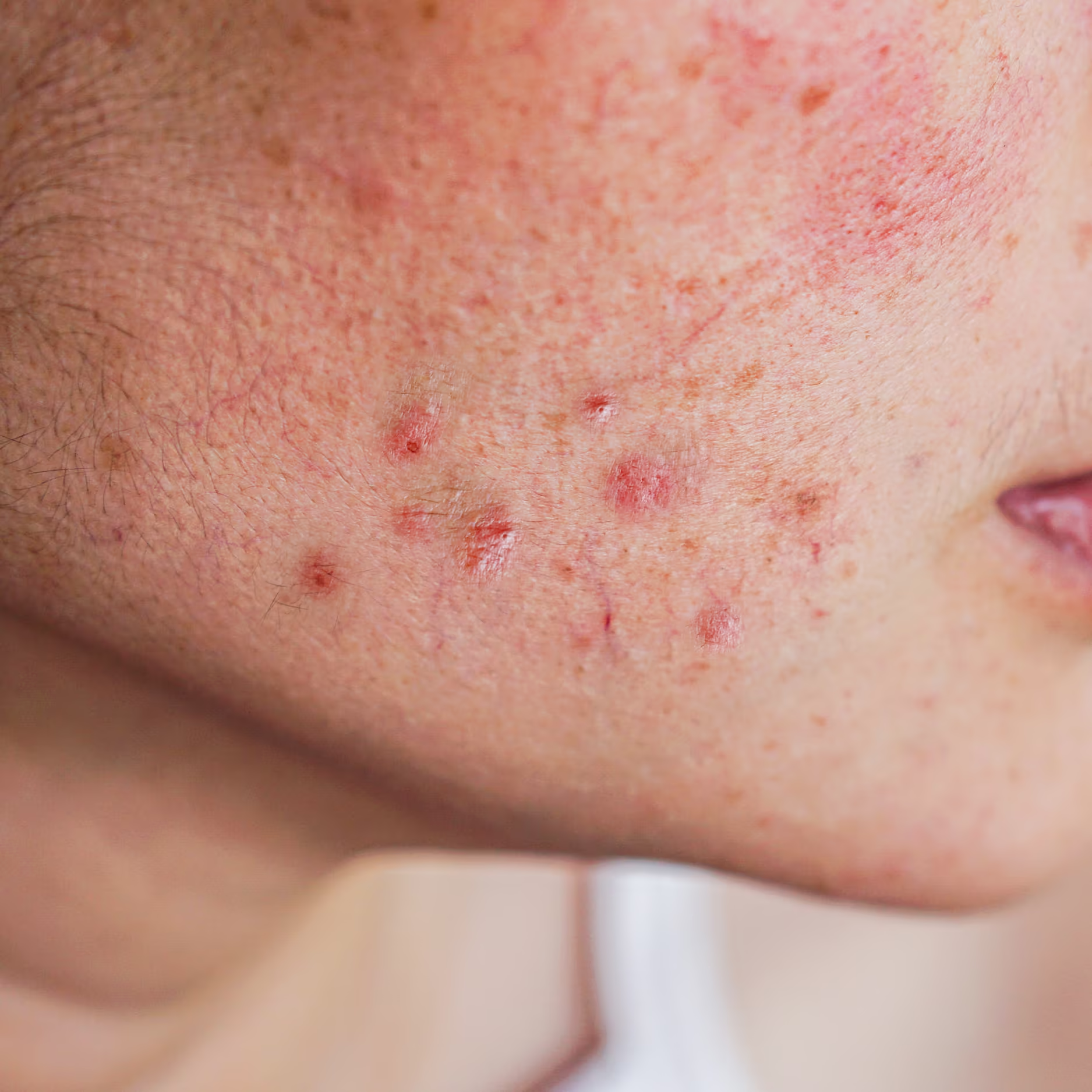
Adult acne (especially along the jawline and chin), monthly breakouts, skin that flares with stress, and hair changes alongside skin changes. These often connect to androgens, the balance of estrogen and progesterone, insulin, and cortisol. Topical treatment can help with flares, while looking at the hormonal pattern underneath addresses what’s driving them. (For people whose acne is connected to PCOS specifically, see our PCOS naturopath guide.)
Gut-Driven Skin
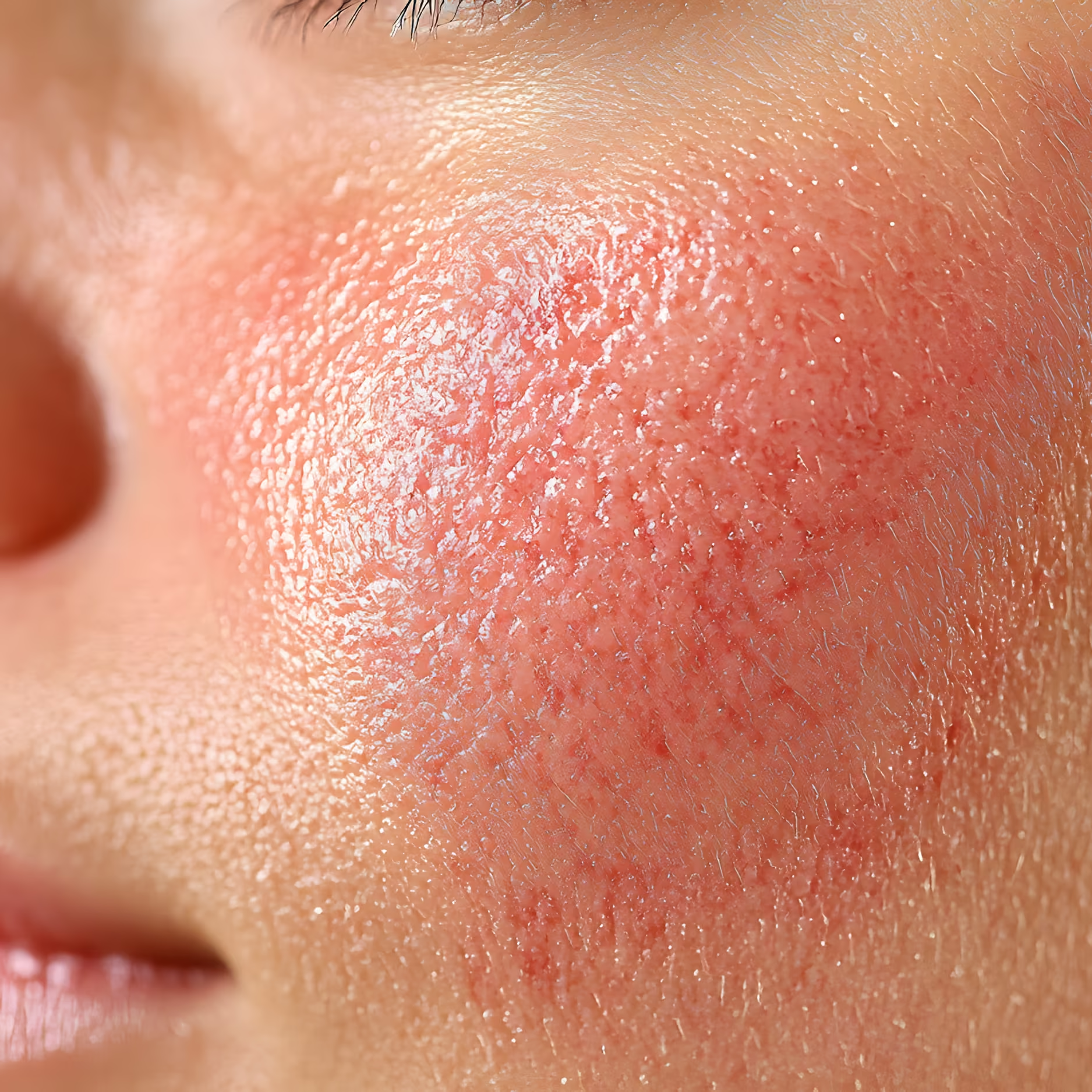
Rosacea, persistent redness, sensitivity that responds poorly to most products, and eczema that comes and goes. The gut-skin axis is well-documented: inflammation in the digestive system frequently shows up on the face. When the gut is supported, skin symptoms often ease in a way topical care isn’t able to reach.
Stress and Cortisol Skin
Skin that ages faster than it should, heals slowly, picks up new pigmentation, or turns dry without much warning. Chronic stress raises cortisol, which breaks down collagen and weakens the skin barrier. Supporting the nervous system and cortisol rhythm often shows up on the skin within a few months. (If you suspect chronic stress is the underlying issue, our burnout recovery guide covers what naturopathic care looks like.)
Nutrient-Depleted Skin
Dullness, slow healing, heightened sensitivity, a weakened barrier. Iron, zinc, B vitamins, omega-3s, and vitamin D all affect how skin functions, and lab work often reveals deficiencies that no topical product can correct.
Inflammatory Skin
Persistent redness, breakouts that don’t respond to the usual treatments, skin that reacts to everything. Chronic, body-wide inflammation drives many skin conditions, and addressing dietary triggers, gut health, and stress often calms it systemically, skin included.
None of this means topical treatments are wrong. They work. The point is that pairing external treatment with internal support often helps the results hold.
What Makes FaceCrime Different
FaceCrime Skin Labs operates as an integrative Skin Lab, combining several approaches under one roof:
Naturopathic medicine. Internal assessment of hormones, gut health, inflammation, nutrient status, and the stress patterns that affect skin.
Aesthetic medicine. Botox, dermal fillers, and other aesthetic services delivered in a regulated medical environment under licensed providers.
Regenerative treatments. PRP and PRF, and microneedling options for those interested in regenerative skin support.
Laser and skin treatments. Targeted laser treatments for pigmentation, redness, texture, and other surface concerns.
IV nutrient therapy. Offered as a service when a licensed practitioner determines it is clinically appropriate after assessment, as part of an individualized care plan.
Massage and acupuncture. Supportive modalities for nervous system regulation, lymphatic flow, and stress management.
The model is intentional. Bringing both together under one roof means you don’t have to choose between addressing what you can see and supporting what’s underneath.
What a Naturopathic Aesthetics Consultation Looks Like
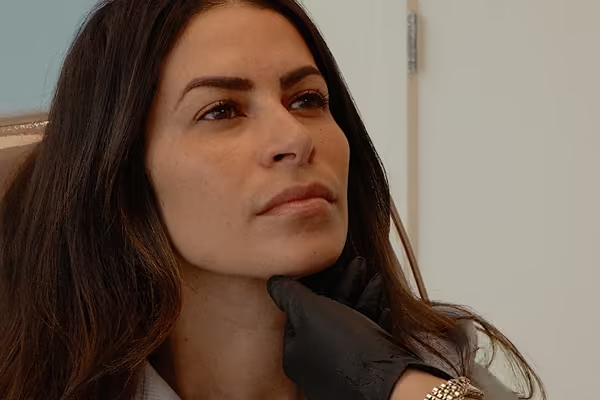
At FaceCrime Skin Labs, the Naturopathic Team starts every aesthetic conversation with context. Why is this concern showing up? When did it start? What’s changed in your health, hormones, stress, or life lately?
A typical consultation includes:
Skin and concern assessment. What you’re seeing, when it started, what makes it better or worse, what you’ve tried.
Health history review. Hormonal patterns, digestive health, sleep, stress, energy, and nutrient status. The internal picture that may be driving what’s on the surface.
Lab work when appropriate. Hormonal panels, inflammatory markers, nutrient levels, thyroid function. Not always necessary, but useful when patterns suggest internal drivers.
Treatment options discussion. What might help externally (topical and in-clinic treatments), what might help internally (dietary, supplemental, lifestyle), and how they could work together.
Personalized plan. Built around your specific picture, not a standard protocol. Some people focus on internal work first. Others combine both from the start. Some prefer external treatment alone. All paths are valid.
Ongoing review. Skin changes slowly. Plans get adjusted as results show up and as new patterns emerge.
Common Concerns Naturopathic Aesthetics Addresses
Adult Acne
Adult acne (particularly hormonal acne along the jawline and chin) often responds to internal support. Topical treatments can help manage flares, while addressing hormonal patterns, gut health, blood sugar, and inflammation works on what’s driving them. The Naturopathic Team works with each person to identify the most likely pattern.
Rosacea and Persistent Redness
Rosacea has strong gut connections. Many people see meaningful improvement when gut inflammation is addressed alongside topical and clinical care. The internal work is slow, but for many people the improvement holds.
Premature Aging
Skin that’s aging faster than expected often points to chronic stress, disrupted sleep, nutrient depletion, or inflammation. Supporting these areas alongside aesthetic treatments is part of a whole-picture approach, and cellular health affects how skin responds to every other step.
Pigmentation and Melasma
Pigmentation has several drivers, including hormones, sun exposure, inflammation, and gut health. Topical and laser treatments work on what’s visible, while addressing internal contributors can help reduce the chance of it returning.
Sensitive or Reactive Skin
Skin that reacts to most products is often inflamed at a body-wide level. Calming that inflammation internally, through dietary changes, gut support, and stress management, often settles reactivity that topical care alone can’t reach.
Dull or Tired-Looking Skin
Sometimes skin looks flat or tired even when nothing’s visibly wrong. This often connects to nutrient depletion, poor circulation, sleep quality, or hormonal shifts, and lab work can reveal patterns that topical treatments don’t address.
What to Expect: Realistic Timelines
The honest version
Skin changes slowly, and internal work especially so. For most people this is a matter of months, not days. That’s normal, and it’s part of why the changes tend to hold.
Most people who add internal support to their aesthetic care notice early shifts within four to eight weeks. Skin might feel calmer, less reactive, or better able to hold hydration. Inflammation often eases first. Bigger changes, like clearer breakouts, less redness, and improved texture, usually show up over three to six months as the underlying patterns shift.
Hormonal changes take a full cycle, sometimes several, to show up on the skin. If hormones are driving your concerns, three to six months is a realistic minimum for meaningful change.
In our experience, the internal work tends to compound. The first year lays a foundation, and later changes build on it.
Aesthetic treatments each work on their own timeline. Some are visible quickly, others build over a series of weeks. We walk you through what to expect for any treatment you’re considering at your consultation. The internal work happens in parallel and supports your skin’s long-term function whichever treatments you choose.
Who Naturopathic Aesthetics Works Best For
Naturopathic aesthetics tends to fit people who:
- Have tried topical treatments without lasting results
- Suspect their skin is connected to hormonal, gut, or stress patterns
- Want to address concerns at the source rather than just managing them
- Prefer working with a provider who considers the whole picture
- Are open to lab work and longer timelines for sustainable change
- Want subtle, natural-looking aesthetic results supported by genuine skin health
It’s less of a fit for people looking only for fast cosmetic results without interest in the underlying patterns. Both approaches are valid. The naturopathic approach is simply built for people who want depth alongside surface treatment.
Ready to Explore Naturopathic Aesthetics?
If you’re in Vancouver and curious about an integrative approach to your skin, a consultation at FaceCrime is a good starting point. You’ll get a clearer picture of what’s driving your specific concerns, what options exist (internal, external, or both), and what a personalized plan might look like.
There’s no pressure to commit to a treatment path. The consultation itself is a chance to understand your skin more deeply and decide what makes sense for you.
Common Questions About Naturopathic Aesthetics
Is naturopathic aesthetics different from a regular medspa?
A medspa usually focuses on aesthetic treatments on their own. Naturopathic aesthetics combines those treatments with internal medical assessment. Both can work. The integrative model suits people who want their skin care to consider the whole body, not just the surface.
Do I have to do the internal work to get aesthetic treatments?
No. Aesthetic services are available on their own. The integrative approach is there for people who want it. Some start with surface treatment and add internal work later, some do both from the beginning, and some prefer surface treatment only. All approaches are valid.
Will I need lab work?
Sometimes, not always. Lab work is suggested when patterns point to internal drivers, like persistent acne, rosacea, premature aging, or sensitive skin. It helps pinpoint what’s actually going on. For straightforward aesthetic services, lab work usually isn’t necessary.
How is this different from just seeing a naturopath?
FaceCrime offers naturopathic care and aesthetic services in one clinic. If you want both perspectives working together, root-cause naturopathic care alongside aesthetic medicine, the model is built for that. A standalone naturopath may not offer aesthetic services, and a standalone aesthetic clinic typically doesn’t offer naturopathic assessment.
Is this approach evidence-informed?
Yes. The connections between hormones, gut health, inflammation, stress, nutrients, and skin are well-documented in research. The internal work draws on evidence-informed naturopathic medicine, and the aesthetic services are delivered in a regulated medical environment under licensed providers.
Is naturopathic care covered by insurance?
Many extended health benefits cover naturopathic visits. Aesthetic treatments typically aren’t covered. Check your plan, or ask FaceCrime about specifics.
The Takeaway
Your skin is connected to the rest of you. Hormones, gut health, stress, sleep, and nutrient status all show up on the surface. Treating only the surface can help, and supporting what’s underneath often helps those results last.
Naturopathic aesthetics is built for people who want both: real aesthetic treatment when it makes sense, real internal support when it can help, and a clinical team that looks at the whole picture rather than one piece of it.
If that sounds like the kind of care you’ve been looking for, a consultation is a low-pressure way to explore whether the approach fits you.
About this post: Written by the Naturopathic Team at FaceCrime Skin Labs. Last updated April 2026. This content is for educational purposes and does not replace medical diagnosis or treatment. Aesthetic and naturopathic services at FaceCrime are delivered in a regulated medical environment under licensed providers in British Columbia. Individual results vary. Botox, dermal fillers, and IV nutrient therapy are offered as services within scope of practice. Discuss your specific situation in consultation with a licensed practitioner.